Dark Outside, Bright Inside: The Nordic Winter Playbook Americans Need Right Now
By the time February rolls around in most American cities, the collective mood has taken a turn. The holiday cheer is long gone, the gym motivation has quietly dissolved, and the general sentiment toward winter has curdled into something between irritation and low-grade despair. We endure it. We count down to spring. We talk about winter like it's a sentence we're serving.
In Norway, they have a saying: "There's no bad weather, only bad clothing." But that's almost too simple — because what Scandinavians have built around winter goes so much deeper than a good coat.
The Science You Can't Ignore
Let's start with what's actually happening in your brain. Seasonal mood shifts are real and well-documented. Reduced daylight suppresses serotonin production and disrupts circadian rhythms. Melatonin production increases in darkness, making you sleepier and, for some people, genuinely depressed. Seasonal Affective Disorder affects an estimated 10 million Americans every year, with another 10 to 20 percent experiencing a milder version.
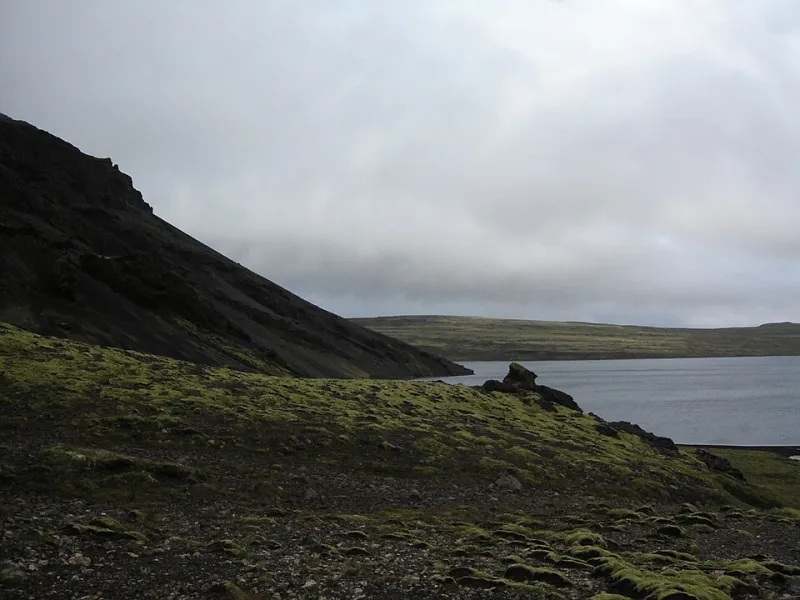
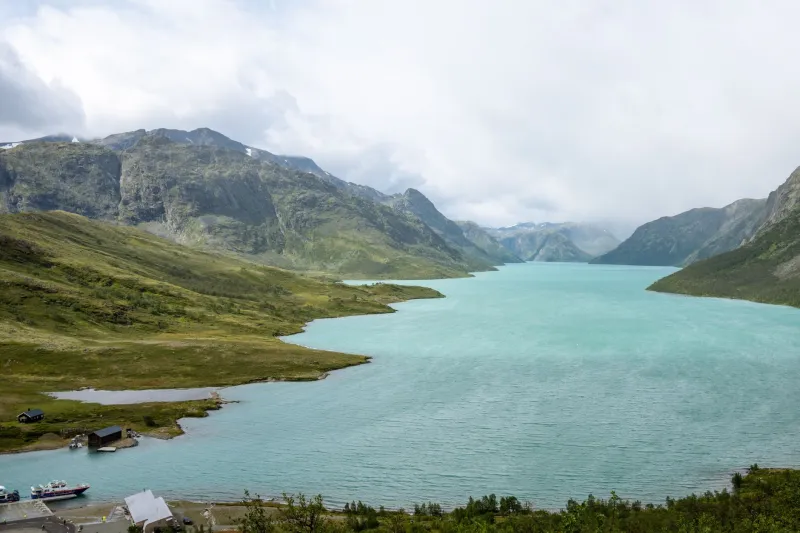
Nordic countries deal with dramatically less daylight than most of the US — Oslo gets about six hours of sun in December. So you'd expect the mental health picture there to be catastrophic. And yet, studies consistently show that Scandinavians don't report the same seasonal suffering that Americans do, even accounting for latitude differences.
The gap isn't genetic. It's cultural.
Reframing the Season Itself
The most fundamental shift in the Nordic winter mindset is this: winter is not the absence of good weather. It's its own season with its own distinct pleasures, and those pleasures are real — they just require some intention to access.
Swedes have a concept called friluftsliv — literally "open air life" — which is essentially a cultural commitment to being outside regardless of what the sky is doing. This isn't extreme outdoor sports (though that's part of it). It's the quiet insistence that a walk in the cold, grey woods is genuinely good for you, not a punishment. Research backs this up: exposure to natural environments in winter, even overcast ones, measurably reduces cortisol and improves mood.
The contrast with American winter behavior is stark. We retreat indoors in October and don't really come back out until April. Scandinavians treat that as a kind of self-imposed suffering that makes winter worse, not safer.
The Light Ritual
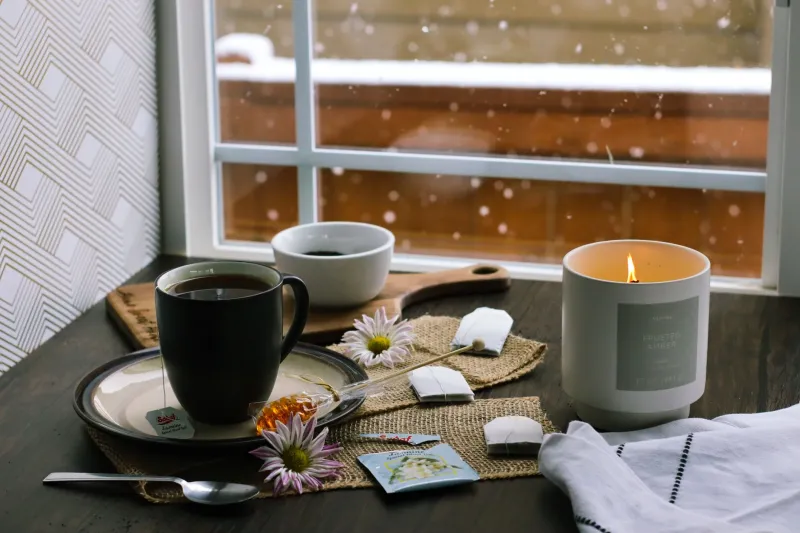
Beyond getting outside, Nordic cultures are obsessive about managing light indoors. This goes way past throwing a few candles on the table, though candles are absolutely part of it.
In Denmark and Sweden, the concept of lykta — a lit lantern placed near windows or on porches — serves as both a warm visual signal to neighbors and a psychological cue to the person inside. Light becomes intentional. You don't just flip on the overhead fluorescents; you create light environments that feel warm and human-scaled.
Light therapy lamps (10,000 lux, used for 20-30 minutes in the morning) are standard household items in many Nordic homes — not a medical intervention, just a normal part of the seasonal routine. In the US, they're often treated as a last resort for people with diagnosed SAD. In Norway, they're as unremarkable as a coffee maker.
The practical takeaway: think about your light environment the same way you'd think about temperature. It's something you actively manage, not just something that happens to you.
Cold as Medicine, Not Punishment
Here's the one that surprises most Americans: Nordic winter wellness culture doesn't just tolerate the cold — it deliberately seeks it out.
The Finnish sauna tradition, which has spread broadly across Scandinavia, involves cycling between intense heat and cold exposure. Ice swimming in frozen lakes is genuinely popular in Norway and Sweden, not as a dare but as a regular practice with a devoted community. The physiological effects are well-researched: cold exposure triggers norepinephrine release (a mood-boosting neurotransmitter), improves circulation, and creates a powerful sense of accomplishment that carries through the day.
You don't need a frozen fjord. Cold showers work. A quick walk in genuinely cold air without bundling up quite so much works. The point is to stop treating cold as something to be completely insulated from and start treating it as something your body can interact with productively.
Social Architecture for Dark Months
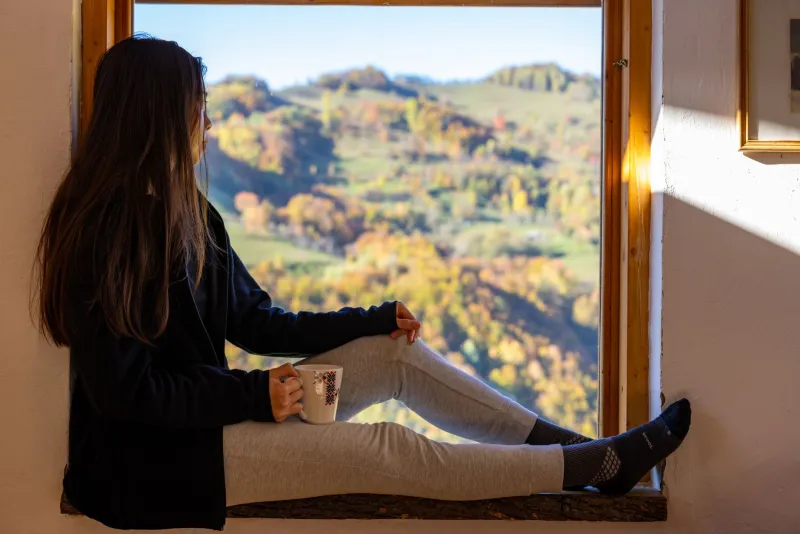
One of the less-discussed aspects of Nordic winter culture is how deliberately social it is. Hygge gets a lot of attention (maybe too much — it's been somewhat flattened by American lifestyle media), but the underlying principle is worth taking seriously: winter is a time for drawing people closer, not retreating further into isolation.
In practice, this means Scandinavians tend to schedule more intentional social time in winter, not less. Small gatherings, regular dinners, community events — the calendar gets populated with things to look forward to. This isn't incidental. It's a cultural response to the psychological risk of winter isolation.
For Americans who tend to hibernate socially from November onward, this is one of the most transferable strategies. Put things on the calendar. Low-key things. Things that don't require energy you don't have. The anticipation alone is a documented mood-lifter.
A Winter Reframe You Can Start This Week
You don't have to overhaul your life to get some of this. A few places to start:
- Go outside in the morning, even for ten minutes. Natural light exposure before 10am is one of the most effective circadian rhythm regulators available.
- Get a light therapy lamp and use it consistently. Put it next to your coffee maker so it becomes automatic.
- Schedule one small social thing per week through February. It doesn't have to be elaborate — coffee counts.
- Take one cold exposure per day, even if it's just ending your shower with 30 seconds of cold water.
- Stop calling winter depressing out loud. Language shapes experience more than we like to admit.
The Nordic relationship with winter isn't about pretending the darkness isn't there. It's about building a life that works with it rather than against it. That's a skill, not a personality trait — and it's genuinely learnable.