Americans Are Moving Toward the Trees — and Scandinavia Is Why
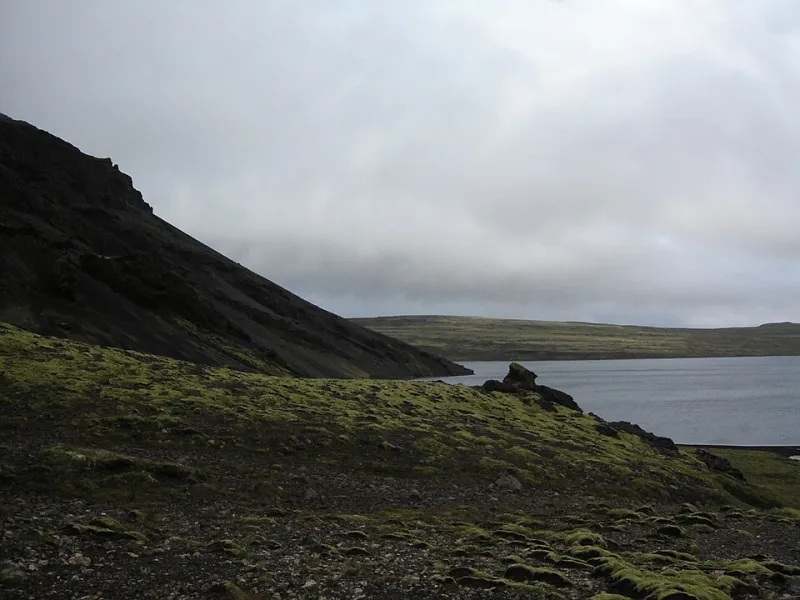
Photo: Syced, CC0, via Wikimedia Commons
Somewhere between the second pandemic year and the third remote-work contract renewal, a certain kind of American started asking a question they'd never seriously entertained before: what if I just... moved near a forest?
Not a cabin-weekend fantasy. Not a retirement plan. A real, logistical, what-would-it-actually-take question about restructuring daily life around proximity to nature. It showed up in Google search trends, in real estate data from Vermont and Montana and the Upper Peninsula of Michigan, and in a thousand quiet conversations between people who had spent the previous decade optimizing their careers and were now optimizing for something else entirely.
Scandinavia had been doing this for centuries. Americans are only now catching up to what that actually means.
The Landscape Shapes the Life
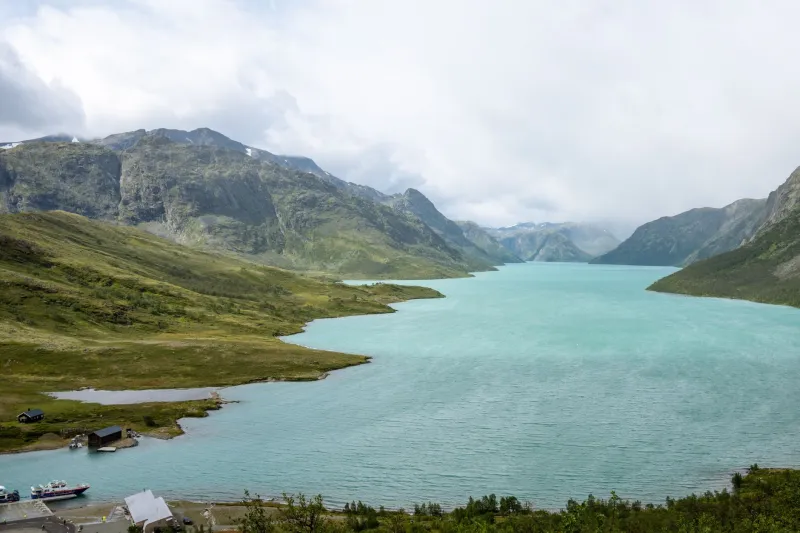
To understand why Nordic culture has such a particular relationship with wilderness, you have to look at the geography. Norway's coastline — with its deep fjords, exposed islands, and mountain plateaus — isn't a backdrop to Norwegian life. It's a participant in it. The same goes for Sweden's vast inland forests, Finland's thousands of lakes, and Denmark's flat, wind-scoured coastline.
This isn't romanticized. It's structural. For most of Scandinavian history, the land dictated the terms. You fished because the sea was there. You skied because the snow made it the only way to get anywhere. You preserved and pickled because the winters were long and the growing season was short. The natural world wasn't something you visited on weekends. It was the context of your entire existence.
Even now, in thoroughly modern Scandinavian cities, that relationship persists in ways that shape behavior and values. The Norwegian concept of friluftsliv — roughly translated as "open-air living" — isn't a wellness trend. It's a cultural inheritance. The idea that time spent outside, in all weather, across all seasons, is not optional but essential to a functioning human life.
In Oslo, you can be in a dense urban neighborhood and twenty minutes from a forest trail. In Stockholm, the archipelago begins at the edge of the city. The design of Scandinavian urban life assumes that nature is close and that people will use it regularly.
What Americans Are Actually Looking For
The post-pandemic migration patterns in the United States tell a complicated story. Yes, people left cities for more space and lower costs. But surveys of people who relocated consistently show something else underneath the practical reasons: a desire for a different relationship with time, with community, and with the physical world.
People wanted to know their neighbors. They wanted to see seasons change. They wanted their kids to play outside in actual dirt. They wanted to hear something other than traffic.
These aren't small desires. They're a renegotiation of what a good life looks like — and they map surprisingly closely onto the values embedded in Nordic lifestyle culture. Not the design aesthetic or the hygge candles, but the deeper structural stuff: slower pace, community rootedness, physical environment as an active part of daily wellbeing.
The Scandinavian model suggests that this isn't a retreat from ambition. It's a reorientation of it.
The Mental Health Connection
The research on nature and mental health has been building for years, but it's now reaching a kind of critical mass in public conversation. Time in natural environments reduces cortisol levels, lowers blood pressure, improves mood, and — in a finding that should give every urban planner pause — measurably reduces the neural activity associated with rumination, the repetitive negative thinking that underlies much of modern anxiety and depression.
Scandinavian countries have long incorporated this understanding into public policy. Green space is protected aggressively. The right to roam — known as allemannsretten in Norway — gives citizens legal access to nature across most of the landscape, including private land, as long as they treat it with care. Nature is not a luxury amenity. It's a public good.
American cities are beginning to grapple with this, but slowly and unevenly. Green space remains heavily correlated with wealth. The neighborhoods with the most trees, the best parks, and the easiest access to trails are almost universally the most expensive ones. This is a structural failure that no amount of individual lifestyle optimization can fully address.
But at the individual level, the shift is happening anyway. People are making choices — about where to live, how to structure their weekends, what to do with their kids after school — that reflect a growing understanding that the natural world isn't optional for human health.
Can You Import the Fjord Effect?
Here's the honest limitation: you cannot fully transplant a relationship with landscape that developed over centuries into a lifestyle decision made at thirty-four. The Norwegian who skis to work in winter and swims in the fjord in summer isn't performing wellness. They're living inside a culture that has always assumed this is what people do.
But you can move in that direction. You can choose the apartment that's near the park over the one that's closer to the bar district. You can take the job that lets you work remotely from somewhere with trees. You can build the habit of going outside in weather that isn't perfect, which is most weather, and discovering that it doesn't actually require perfect weather to be good.
You can decide, as a family, that weekends involve something physical and outdoor as a default rather than an exception. You can stop treating nature as a destination and start treating it as a commute.
A Different Kind of Ambition
What's most interesting about the Americans gravitating toward this shift isn't that they're dropping out. Most of them aren't. They're working, building careers, raising kids. They just want to do those things somewhere that doesn't feel like a machine optimized for productivity.
Scandinavia figured out a long time ago that proximity to wildness doesn't make people less productive. It makes them more resilient, more grounded, and — maybe most importantly — more likely to feel that their lives are actually worth living.
That's not a small thing. And it's worth moving toward, even if the nearest fjord is a lake in Wisconsin.