Bored on Purpose: The Scandinavian Secret to Doing Less and Thinking Better

Picture this: it's a Tuesday afternoon in Oslo. A product designer named Ingrid finishes her lunch, pushes back from her desk, and spends twenty minutes staring out the window at a grey fjord. No phone. No notebook. No "mindful breathing app" counting her inhales. Just... staring. By Thursday, she's cracked a design problem that's been nagging at her team for two weeks.
In America, we'd probably call that procrastination. In Norway, it's closer to standard operating procedure.
The idea that downtime is productive — not in spite of its emptiness, but because of it — runs surprisingly deep in Scandinavian work culture. And as American burnout rates climb and the self-optimization industry balloons into a multi-billion dollar machine, more people stateside are starting to wonder whether the Nordic approach to boredom is actually onto something real.
Spoiler: the science says yes.
What We Mean When We Say "Productive Boredom"
Let's be clear about something right away. This isn't about being lazy. Scandinavian countries consistently rank among the world's most productive economies per hour worked. Denmark, Sweden, and Finland regularly top global innovation indexes. These are not nations of people lying around doing nothing.
What they are doing is protecting mental white space — those stretches of time when the brain isn't being fed new information, chasing notifications, or executing a task list. Psychologists sometimes call this the "default mode network," the brain's background processing system that kicks in during low-stimulation states. Think of it as your mind's version of running a software update: it only happens when you stop actively using the machine.
Research out of the University of Central Lancashire found that people who performed a boring task before a creative challenge significantly outperformed those who jumped straight in. Other studies have linked mind-wandering — that drifty, unfocused mental state boredom tends to produce — to higher scores on tests measuring creative thinking and novel problem-solving.
In short, your brain does some of its best work when you give it permission to do nothing in particular.
How Scandinavians Actually Do It
The difference isn't just philosophical. It shows up in specific, observable habits that feel almost countercultural by American standards.
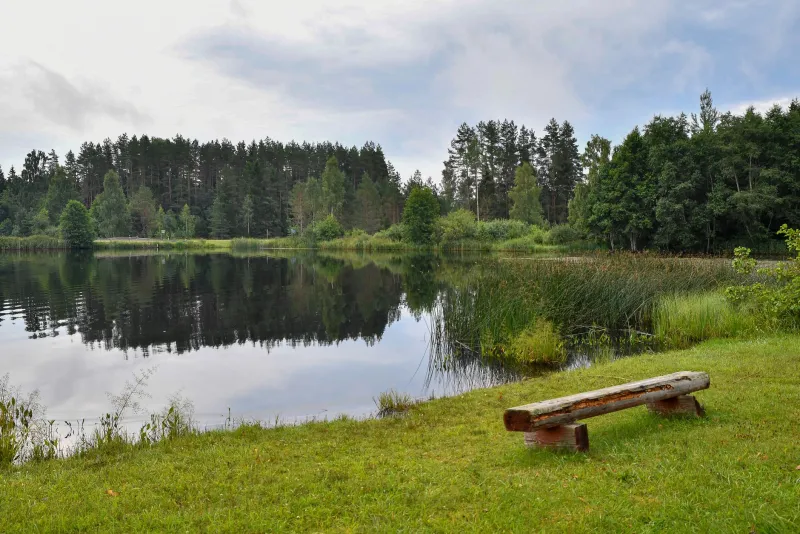
Take the concept of friluftsliv — the Norwegian tradition of spending time outdoors in nature, often without a destination or agenda. This isn't a hike with a fitness tracker. It's a walk in the woods with no particular goal, no calorie count, and no Instagram story waiting at the end. The point is to be somewhere quiet and let your mind unspool.
Or consider the Swedish workplace norm of the fika — a coffee break that's genuinely protected time. Not a five-minute gulp at your desk while answering emails. A real pause, often twice a day, where conversation drifts wherever it wants to. Swedish companies treat fika as structurally important, not a luxury that gets sacrificed when deadlines loom.
Then there's the broader Scandinavian cultural skepticism toward what they'd call prestasjonsjag — roughly translated as the relentless chase for performance. The social pressure to be constantly optimizing, constantly achieving, is noticeably lower across Nordic countries than in the US. That cultural permission to simply be without producing creates room for the kind of mental wandering that eventually circles back to insight.
The American Problem (And It's a Real One)
Here in the States, we've essentially declared war on boredom. We've built an entire economy around filling gaps. Waiting for your coffee? Here's a notification. Commuting? Here's a true-crime podcast. Can't sleep? Here's an autoplay queue that never ends. The average American adult now spends over seven hours a day in front of screens, and a significant chunk of that is driven by the low-grade anxiety of having nothing to do.
The irony is that all this stimulation is making us worse at the thing we're supposedly optimizing for: thinking clearly and solving problems creatively. Constant input crowds out the processing time our brains need. We're essentially trying to run complex background programs while keeping every app on the phone open at full brightness.
And the hustle culture overlay makes it worse. There's a specific American guilt that comes with doing nothing — the sense that unscheduled time is wasted time, that rest needs to be "earned," that if you're not grinding, someone else is getting ahead. That anxiety is itself cognitively expensive. It keeps the brain in a low-level stress response that's the opposite of the relaxed, associative thinking state where good ideas tend to emerge.
Practical Ways to Borrow the Nordic Playbook
You don't need to move to Bergen to experiment with this. A few intentional shifts can go a long way.
Let yourself be bored in transit. Try commuting — whether that's a train, a bus, or even a drive — without audio. No podcast, no playlist, no call. Just the sound of the road and your own thoughts. It feels uncomfortable at first, which is actually the point. That discomfort is your brain relearning how to generate its own content.
Schedule a real break. Not a "scroll through your phone" break. A genuine pause where you make coffee, drink it somewhere with a view (even if that view is just a parking lot), and let conversation or silence happen naturally. Borrow the fika model: twice a day, non-negotiable.
Try a purposeless walk. No route, no goal, no tracker. Twenty minutes outside with your hands empty. Scandinavians aren't precious about the setting — a suburban sidewalk works just as well as a fjord. The practice is the point, not the scenery.
Protect one boring task. Dishes, folding laundry, a slow commute — instead of immediately filling that time with a podcast or audiobook, let it be quiet. These repetitive, low-demand activities are actually ideal conditions for the default mode network to do its thing.
Reframe the guilt. This is the hardest one for most Americans. The Scandinavian cultural frame treats rest and mental space as inputs to good work, not absences of it. Shifting that mental model — even slightly — makes it easier to actually follow through.
The Quiet Competitive Edge
Here's what's interesting about the Nordic relationship with boredom: it's not framed as self-care or wellness. It's framed as common sense. Of course you need mental space to think well. Of course constant stimulation degrades your judgment. Of course you'll make better decisions when you're not running on cognitive fumes.
That matter-of-fact attitude is maybe the most useful thing to import. Not the aesthetics of hygge candles or the vocabulary of lagom, but the underlying assumption that a well-rested, occasionally bored mind is simply a more effective mind.
Ingrid, staring out at that grey fjord, isn't slacking. She's working — just not in a way that shows up on a time-tracking app. And maybe that's exactly the point.