Clean Lines, Clear Minds: Why Nordic Design Is Taking Over the American Home
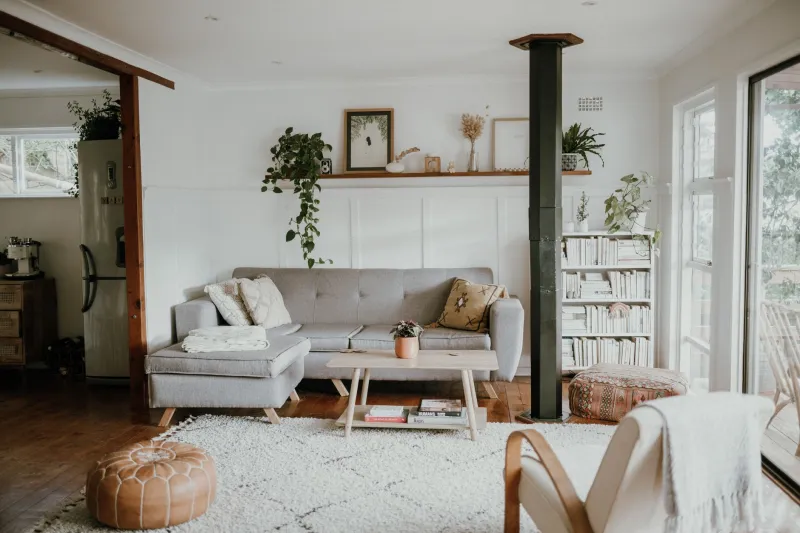
Walk into a newly renovated home in Portland, Oregon, or a thoughtfully redesigned bungalow in Nashville, and you might notice something. The clutter is gone. The palette is quiet — whites, warm grays, maybe a flash of sage or birch wood. There's a plant in the corner that actually looks like it belongs there. The furniture is low-profile, functional, and somehow manages to make the whole room feel like a deep breath.
This is Nordic design doing its quiet, unassuming work on American living spaces — and it's happening faster than most people realize.
More Than a Furniture Trend
When most Americans think Scandinavian design, their minds go straight to a certain Swedish furniture giant with a cafeteria that serves meatballs. And sure, flat-pack furniture helped introduce a generation of college students to the idea that simple could be stylish. But what's happening in American homes right now is something altogether different.
Designers and homeowners across the country are embracing the philosophy behind Nordic interiors — not just the look. That philosophy, rooted in the practical realities of Scandinavian life, centers on a few core ideas: that every object in a space should earn its place, that natural light is sacred, and that a home should support the people living in it rather than impress anyone walking through the door.
"There's a concept in Scandinavian design called omtanke — it roughly translates to thoughtfulness or consideration," says Chicago-based interior designer Mara Lindqvist, whose practice has shifted significantly toward Nordic-influenced residential work over the past five years. "It means you think carefully before you add something to a space. You ask whether it serves a purpose, whether it brings beauty, whether it fits. Americans are really hungry for that kind of intentionality right now."
The Sustainability Connection
One reason Nordic design principles are landing so well in the US right now is that they align naturally with a growing American interest in sustainable living. Scandinavian design has always favored durability over disposability — pieces built to last decades rather than seasons. Natural materials like pine, wool, linen, and stone aren't just aesthetic choices; they're a reflection of a deeper relationship with the environment.
In countries where winters are long and resources have historically been finite, you don't waste. You choose well, you maintain what you have, and you build spaces that work hard. That ethos translates almost perfectly into what a lot of American homeowners are looking for as they push back against the fast-furniture cycle and start asking harder questions about where their stuff comes from.
In cities like Denver and Minneapolis — places with their own strong relationship to cold seasons and outdoor culture — designers are reporting a marked uptick in clients asking specifically for Nordic-influenced spaces. The connection isn't coincidental. People who spend time outdoors, who feel the seasons shift, tend to want their interiors to reflect that same grounded, natural sensibility.
What a Nordic-Influenced Home Actually Looks Like
Let's get specific, because "minimalist" is one of those words that gets thrown around until it loses all meaning.
A genuinely Nordic-influenced American home isn't just a white room with nothing in it. It's a space where storage is built in and invisible, so surfaces stay clear without constant effort. It's where windows are treated as architectural features rather than afterthoughts — often left bare or dressed with simple linen panels that move in the breeze. It's where a single well-chosen piece of art does more work than a gallery wall of fifteen prints.
Texture plays a huge role. Because Nordic design tends to keep color restrained, it leans on tactile contrast to keep spaces from feeling cold or sterile. A chunky knit throw over a clean-lined sofa. A rough-hewn wooden bowl on a smooth marble counter. Matte plaster walls beside a polished concrete floor. The warmth comes from material, not from decoration.
"My clients always say they want minimalism, but what they actually want is calm," says Phoenix designer James Okafor, who studied architectural theory in Copenhagen before returning to the US. "Nordic spaces are calm because they're resolved. Every decision has been made deliberately. There's no visual noise."
Spatial Planning, Not Just Styling
What separates a truly Nordic-influenced home from one that's just borrowed the aesthetic is spatial planning — the way rooms are organized and how people move through them. Scandinavian architecture has long prioritized what designers call flow: the idea that a home should guide you through it naturally, that transitions between spaces should feel easy and logical.
This shows up in open-plan layouts that still manage to feel intimate, in mudrooms that function as genuine transition zones between outdoors and in, and in kitchens designed around how people actually cook rather than how kitchens look in magazines. It's practical. It's human-scale. And it stands in pretty sharp contrast to a lot of American home design, which has historically prioritized square footage and visual drama over livability.
Some American architects are now explicitly incorporating Nordic spatial principles into new builds and renovations. In Vermont and Maine — states with climates and landscapes that feel almost Scandinavian — a small but growing number of firms are designing homes that borrow from the Nordic tradition of connecting interior and exterior spaces through covered porches, large glazed walls, and landscaping that blurs the line between inside and out.
Why It Feels Right for Right Now
There's a reason this particular design tradition is resonating so strongly with Americans at this particular moment. After years of maximalism, of statement walls and open shelving crammed with curated objects and homes designed to perform on social media, a lot of people are quietly exhausted.
Nordic design offers something that feels almost countercultural in the current moment: restraint. The idea that a beautiful home doesn't need to shout. That less, when it's the right less, genuinely is more. That the goal of a living space is to support your actual life — your sleep, your work, your relationships, your mental health — rather than to signal anything to anyone.
Mara Lindqvist puts it simply: "When my clients walk into a finished space and just go quiet for a second — that pause, that exhale — that's the whole point. That's what Nordic design does. It gives you room to breathe."
In a country that's been holding its breath for a while, that's not a small thing.