Cold Skies, Dark Secrets: Why America Can't Stop Reading Nordic Noir
Picture this: it's a Tuesday night in suburban Ohio, and Karen, a middle school librarian, is three chapters deep into a Swedish thriller set in a snow-buried village outside Stockholm. She's got a cup of tea going cold on the nightstand and absolutely zero intention of sleeping anytime soon. "I don't know what it is," she told us over email. "It just pulls you in differently than anything I've read in years."
Karen is not alone. Not even close.
Over the past two decades, Scandinavian crime fiction — often lumped under the moody umbrella of "Nordic noir" — has gone from a niche import to a full-blown cultural phenomenon in the United States. Stieg Larsson's The Girl with the Dragon Tattoo sold more than 100 million copies worldwide. Jo Nesbø's Harry Hole series fills airport bookstores from LAX to JFK. And streaming platforms have made it almost impossible to scroll for more than five minutes without stumbling across a Danish or Norwegian crime drama. So what's going on here?
The Landscape Does Half the Work
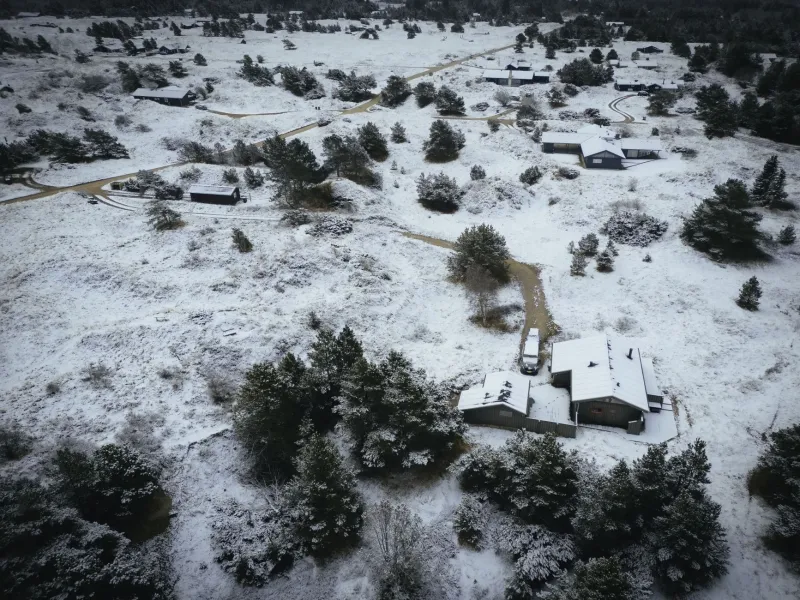
One of the first things readers and critics mention when they talk about Nordic noir is the setting — and honestly, it's hard to overstate how much the physical environment shapes these stories. The long winters, the near-total darkness, the vast and empty countryside punctuated by small, eerily quiet towns. It creates a kind of atmospheric pressure that American crime fiction, often set in sun-baked cities or neon-lit suburbs, rarely replicates.
"There's a particular kind of dread that comes from a place where the sun doesn't rise for weeks," says Marcus Holt, a literature professor at Portland State University who teaches a seminar on Scandinavian crime writing. "The landscape isn't just backdrop — it's almost a character. It externalizes the psychological state of the investigation itself."
For American readers accustomed to the procedural rhythms of authors like James Patterson or Harlan Coben, this shift in atmosphere can feel genuinely disorienting — in the best possible way. The fjords and frozen forests of Norway, the flat, windswept plains of rural Sweden, the fog-draped harbors of Copenhagen: they're visually and emotionally distant enough from everyday American life to feel like genuine escapism, but grounded enough in recognizable human experience to stay relatable.
Moral Complexity as a Feature, Not a Bug
Another thing that sets Nordic crime fiction apart is its willingness to let its protagonists be genuinely flawed — not in a charming, quirky way, but in ways that feel uncomfortably real. Harry Hole is an alcoholic. Lisbeth Salander is antisocial, traumatized, and operates almost entirely outside the law. Kurt Wallander, from Henning Mankell's beloved series, is depressed, divorced, and frequently wrong about things.
These are not heroes who tie everything up neatly. And American readers, it turns out, find that deeply refreshing.
"We've been conditioned to expect a certain kind of competence from our fictional detectives," says Holt. "Nordic crime writers broke that mold deliberately. The investigator's personal chaos isn't a subplot — it's central to the story's meaning."
This moral ambiguity extends beyond the main characters. Nordic noir frequently implicates entire systems — government corruption, institutional failure, the quiet violence of a society that presents a clean, egalitarian face while harboring dark secrets underneath. That's a form of social commentary that lands hard in a country currently grappling with its own complicated relationship to institutions and public trust.
The Welfare State as Crime Scene
Here's something that surprises a lot of American readers when they first encounter it: Nordic noir is, at its core, deeply political. Not in a preachy way, but in a way that's woven into the DNA of the genre.
Many of these stories use crime as a vehicle to examine the cracks in Scandinavian social democracy — the ways that even societies with strong safety nets and high standards of living can still produce violence, inequality, and injustice. Larsson's Millennium trilogy, for instance, is explicitly about the abuse of power within Swedish institutions. Nesbø's novels frequently circle back to questions of corruption, nationalism, and the failure of state protection.
"There's something almost paradoxical about it," notes Holt. "These are countries that Americans often hold up as models of social progress. And yet the crime fiction coming out of those countries is relentlessly interrogating the limits of that progress. It's unsettling in a really productive way."
For American audiences already primed to question their own institutions, that framework resonates. It's different enough to feel like a foreign lens, but close enough to feel relevant.
The Streaming Boost
It would be dishonest to talk about the Nordic noir boom without acknowledging the role of television — specifically, the wave of Scandinavian crime dramas that hit American streaming platforms starting in the early 2010s. Shows like The Bridge, Borgen, Wallander, and more recently The Valhalla Murders introduced millions of American viewers to Nordic storytelling conventions before they ever picked up a novel.
That exposure created a feedback loop. Viewers who fell in love with the pacing, the visual language, and the tonal seriousness of these shows went looking for more — and found a rich literary tradition waiting for them. Publishers noticed. The US market for translated Scandinavian fiction has grown steadily, and literary agents increasingly scout Nordic authors as reliable commercial bets.
"The shows were a gateway," says Karen, our librarian from Ohio. "I watched The Killing on Netflix and then immediately ordered three books. That was five years ago and I haven't stopped."
Something Familiar in the Foreign
Maybe the most interesting thing about America's love affair with Nordic noir is what it reveals about us. These stories are set in places most Americans will never visit, featuring characters shaped by cultural contexts that are genuinely different from our own. And yet readers consistently describe them as deeply relatable.
Part of that is the universal nature of grief, guilt, and the search for justice. But part of it, too, might be that Nordic noir gives American readers permission to sit with discomfort — to dwell in moral uncertainty without demanding resolution. In a media landscape that often rushes toward catharsis, there's something almost radical about a story that lets the darkness breathe.
Whatever the reason, the fjords have claimed a permanent spot on American bookshelves. And honestly? We're not complaining.