What Happens When Kids Come Home to Nothing: The Nordic Homework-Free Experiment

Photo: Wilfredor, CC0, via Wikimedia Commons
It's 5:30 PM in a suburb of Minneapolis. A third-grader is crying over a math worksheet. Her mom, who has already worked eight hours, is trying to explain long division while also making dinner. The dog needs to go out. The worksheet is due tomorrow. Nobody is happy.
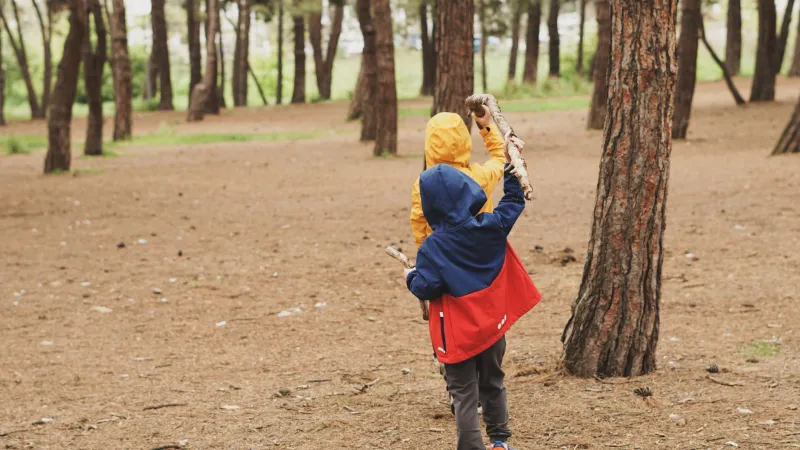
Meanwhile, in Helsinki, a third-grader just got home from school, dropped her backpack, and went outside.
This is not a coincidence. It's a policy.
Finland Decided Something Different
Finnish schools — consistently ranked among the best in the world by international assessments like PISA — famously assign very little homework, particularly in the early years. In the lower grades, homework is essentially nonexistent. Even in secondary school, Finnish students average less than thirty minutes of homework per night, compared to American students who can clock an hour or more by middle school.
Norway, Sweden, and Denmark follow similar philosophies, with varying degrees of formality. The underlying belief across Nordic education systems is consistent: children learn better when they're not exhausted, when they have time to play, and when school hours are used efficiently enough that nothing needs to spill into family time.
That last part is worth sitting with. The Nordic model treats homework not as a sign of rigor, but as evidence that school time wasn't used well enough.
Play Is Not a Reward — It's the Work
One of the most significant philosophical differences between Nordic and American education is how each system views unstructured time.
In the U.S., recess has been shrinking for decades, particularly in lower-income districts where pressure to hit standardized test benchmarks has squeezed out anything that doesn't look like instruction. Play is treated as a break from learning — a reward for sitting still long enough.
Scandinavian schools operate from the opposite premise. Play is how young children process information, develop social skills, build resilience, and regulate their emotions. It's not a break from learning; it is learning. Finnish kindergartens, in particular, are built around play-based discovery. Formal reading instruction doesn't typically begin until age seven. Before that, kids are outside, building things, telling stories, and figuring out how to get along with each other.
The research backs this up. Studies in developmental psychology consistently show that children who have adequate free play demonstrate better executive function, stronger language development, and higher long-term academic outcomes than those pushed into structured academics too early.
What This Means for American Families Right Now
Here's the honest part: you cannot single-handedly change your child's school system. If their teacher assigns homework, the homework still has to get done. But there are principles embedded in the Nordic model that American parents can apply at home, regardless of what's happening in the classroom.
Protect the after-school window. Nordic children have unscheduled time built into their afternoons by design. American parents can approximate this by resisting the urge to fill every hour after school with structured activities. Even an hour of genuinely unstructured time — outside if possible, screen-free if you can manage it — gives a child's nervous system a chance to decompress.
Reframe your role in homework. Nordic education philosophy places responsibility for learning on the child, not the parent. If you're spending forty-five minutes every night sitting next to your kid doing their homework with them, ask whether that's actually helping them develop independence or just getting the worksheet done. There's a difference.
Push back on unnecessary load. American parents have more power to advocate within their schools than they often use. Research on homework effectiveness — particularly for elementary-age children — is surprisingly thin. The evidence that nightly homework improves outcomes in grades K through 5 is weak at best. If your child's school assigns significant homework to seven-year-olds, you are allowed to ask why.
Prioritize sleep over completion. Nordic families tend to treat children's sleep as non-negotiable. If a homework assignment is going to cost your kid an hour of sleep, the Nordic framework would suggest the sleep matters more. That's a hard call to make in a system that grades compliance, but it's worth knowing where the research actually stands.
The Stress Question
Beyond academic outcomes, there's a quality-of-life argument that doesn't get made often enough in American education debates. Family stress is a health issue. The nightly homework battle — common enough that it has its own genre of parenting articles — erodes the relationship between parent and child, turns dinner into a deadline, and creates anxiety in kids who are still years away from needing to manage high-stakes academic pressure.
Scandinavian countries consistently rank among the happiest in the world. Their children report lower levels of school-related stress than American kids. These facts are connected to policy, but they're also connected to a cultural belief that childhood is not a pre-professional training period. Kids are allowed to be kids for longer, and the academic outcomes don't suffer for it.
What We're Actually Afraid Of
The resistance to reducing homework in American schools often comes from a place of anxiety — the fear that if our kids do less now, they'll fall behind later. That someone else's child is doing more, learning more, becoming more competitive.
This fear is understandable. It's also, according to the evidence, largely unfounded for the elementary years.
Nordic countries aren't producing less-educated adults. They're producing adults who like to learn, who know how to think, and who didn't spend their childhoods dreading the school day.
That's a different kind of outcome to aim for. And it starts with letting a kid come home and go outside.